Olive Morris: A Black Feminist Radical
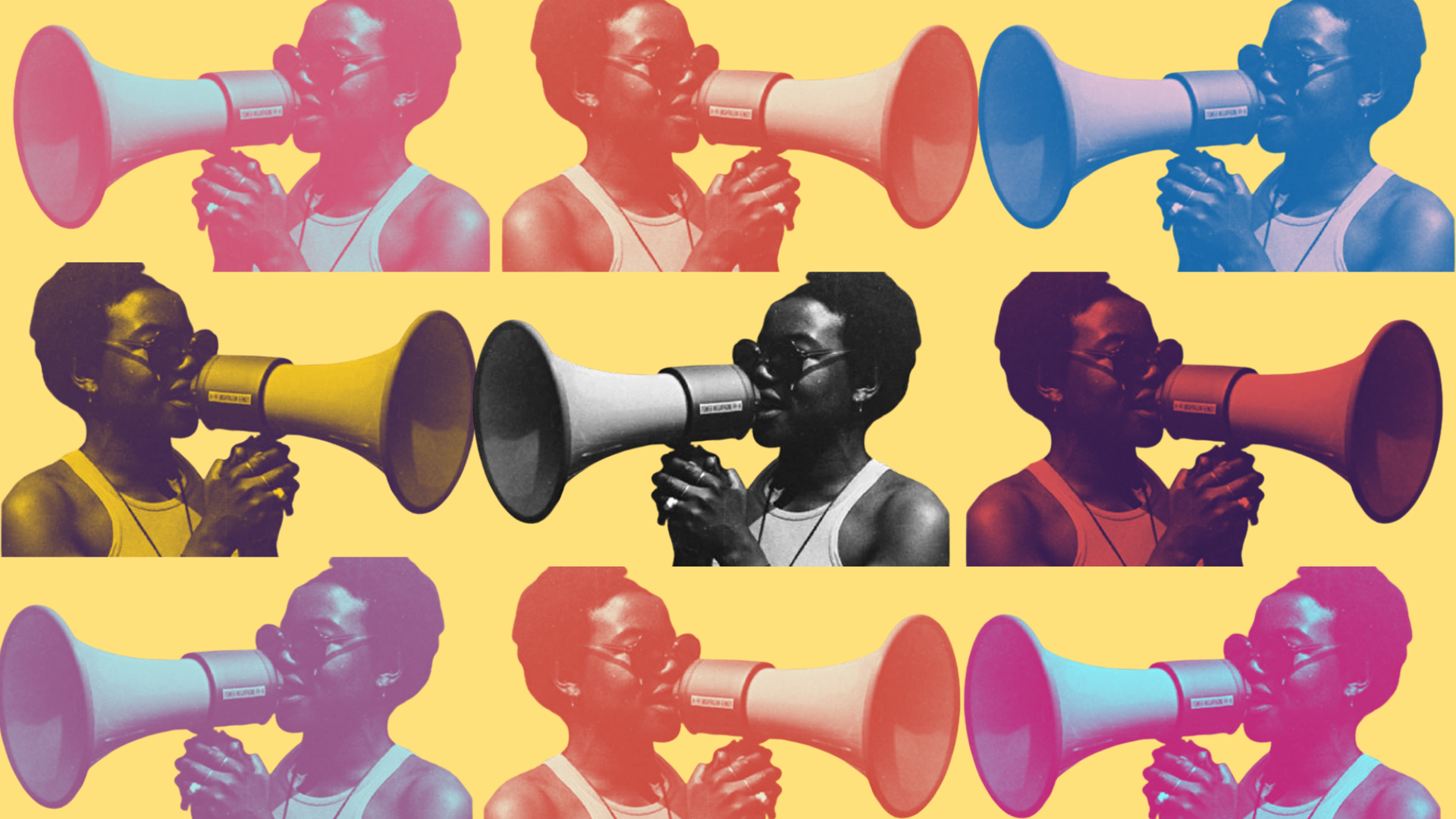
Collage honoring Olive Morris. Photograph of Olive Elaine Morris by unknown photographer, c.1978. London Borough of Lambeth.
By Karla Méndez
A study and tribute to the radical feminism of community leader and activist, Olive Morris.
Introduction
Though her life and activism were short-lived, Olive Morris’ involvement in organizations that fought against racism and sexism and advocated for housing rights in Great Britain significantly influenced the construction of a Black Power movement in Britain, leaving behind a legacy that continues to reverberate through advocacy movements today.
Child of the Windrush
Born in Jamaica on June 26th, 1952, to Vincent Nathaniel Lawrence and Doris Lowena, Morris and her five siblings lived on the island until she was nine, at which point they migrated to Great Britain where they joined their parents. Referred to as the Windrush Generation, at the end of World War II, many people who lived in British colonies in the Caribbean like Jamaica, Trinidad, St. Lucia, and Barbados were encouraged to migrate to England to combat labor shortages. The passage of the British Nationality Act of 1948 provided immigrants the legal right to live and work in the country, and led to hundreds of Black individuals making the journey. They were employed as factory workers, domestic workers, and nurses in the newly established National Health Service (NHS). The casting of immigrants in labor intensive jobs worked to perpetuate the racial and socioeconomic hierarchy that governs British society.
As a child of the Windrush Generation, Morris was not only aware of the struggle immigrants endured as they settled into their new lives, but she was also a witness to the experiences of her parents. Knowing that hundreds of Black Caribbeans were enticed with the promise of employment and opportunities for advancement yet became victims of a system that was never meant to profit them helped fuel her activism.
Artwork of Olive Morris by Sedrick Miles.
It Happens in England, Too
At the age of 17, Morris was taken into custody after intervening in the arrest of Clement Gomwalk, a Nigerian diplomat. While in custody, she was beaten and sexually assaulted, an occurrence that is far too common. Interactions between Black women and police officers in Great Britain, like those in the United States, too often end up in violence or death. What is worse is that their treatment is repeatedly ignored or discounted. Many make the argument that because police officers in the U.K. aren’t armed, they are harmless. Yet statistics like the fact that Black people account for 8 percent of recorded deaths in police custody in the U.K. despite making up only 3 percent of the population highlight the harm inflicted on the group.
For Morris, this experience influenced her desire to strengthen her political activism through exposing racism, sexism, and police brutality, and their impact on issues like housing and squatter’s rights. She was fined £10 and given a three-year suspended sentence of three months in prison for assaulting a police officer, threatening behavior, and possessing weapons. Her sentence was later reduced to one year. Shortly after, Morris joined the British Black Panthers (BPP). Though not affiliated with the Black Panther Party in the U.S., the U.K. group was inspired by and shared in the fight to improve local communities through education and against racial discrimination. Through her membership in the BPP, she was able to act against police harassment. Like the U.S. Black Panther Party, many activists were finding themselves becoming victims to false charges.
Protesting for Liberation
Morris and other members campaigned at the trials of accused activists, like the Mangrove Nine, a group of nine Black British activists who in 1970, were tried for inciting a riot at a protest against the police targeting of the Caribbean restaurant, The Mangrove. They were also present at the trial of the Oval Four, during which four Black men were being tried for allegedly stealing handbags. During the trial Morris was arrested after a struggle with police officers in an incident reminiscent of the Gomwalk incident.
Her arrest and subsequent trial for assault occasioning actual bodily harm became a moment during which Morris and the two other accused utilized their experiences and dedication to a Pan-African, Black Nationalist movement. They requested that the jury be Black and / or working class. In the U.K., like the U.S. jurors are selected at random. And like the U.S.. there are criteria a potential juror must meet or they’re disqualified. The Juries Act 1974 helps to identify individuals who are ineligible for service on a jury. Among the disqualifiers were those on bail in criminal proceedings, anyone who had been given an indefinite or five-year prison sentence, or someone who had been lawfully imprisoned. This brings to mind how the judicial system overwhelmingly punishes Black people at a higher rate, and yet when afforded the privilege of a trial, jury selection keeps their peers from playing a part in potentially freeing them. The introduction of majority verdicts in 1967 compared to unanimous verdicts further weakened the influence of minority ethnic individuals and the laboring class.
Morris and her comrades recognized the biases toward minority groups. In addition to their jury request, they looked into the judge, John Fitzgerald Marnan and learned he had prosecuted participants in the anti-colonial Mau Mau Uprising. Their preparedness and the contradictory statements made by the nine officers who provided evidence worked in their favor as they were acquitted.
“Though her life and activism were short-lived, Olive Morris’ involvement in organizations that fought against racism and sexism and advocated for housing rights in Great Britain significantly influenced the construction of a Black Power movement in Britain, leaving behind a legacy that continues to reverberate through advocacy movements today.”
Our Feminisms Are Not the Same
Morris’ position as a radical feminist, that is a militant approach to opposing and dismantling the patriarchal systems that govern society guided her to found the first Black women’s group in the U.K, Brixton Black Women’s Group (BBWG) in 1973 with Liz Obi and Beverley Bryan. Similarly to other Black feminist groups of the time, like the National Black Feminist Organization, the Combahee River Collective, and the Third World Women’s Alliance, the BBWG viewed the issues that mainstream feminist movement centered as disregarding how the experience of being a Black woman shifts focus from abortion rights to childcare and wages for domestic work. As Rafia Zakaria defines in her book Against White Feminism: Notes on Disruption, a white feminist is “someone who refuses to consider the role that whiteness and the racial privilege attached to it have played and continue to play in universalizing white feminist concerns, agendas, and beliefs as being those of all feminism and all feminists.” It centers the experience of White women and does not take into account the differences shaped by race, socio-politics, and general behavior toward Black women.
Artwork of Olive Morris by Sedrick Miles.
Tobi Thomas writes for The Guardian, the group was also moved to form following the sexual violence of immigrant women from India and Pakistan who were subjected to “virginity tests.” The test was conducted to determine if a woman was married because immigration laws at the time stated that if a woman was coming to Britain to marry within three months, she did not need a visa. The group’s organization mirrored the structure of radical feminism in that there was no hierarchy, challenging the patriarchal structure of society. For Morris and the other founders, it was crucial to have a space where women of African and Asian descent “could meet to focus on the political, social, and cultural issues” that affected Black women (Footnote 1)
Squatters’ Rights
One of the more prominent issues Morris and the BBWG undertook was that of squatter’s rights and housing needs, particularly in regards to the intersection of Black women and politics. Out of necessity, Morris began to squat buildings in Brixton but then began to view occupation to initiate political projects. In an echo of today’s housing market, Morris stated that the prices for flats and bedsits are too high for her. Following the Universal Declaration of Human Rights proclamation that housing is a human right, Morris also viewed squatting as direct action and encouraged others to do the same. She understood how crucial housing is to someone's safety and health but also linked to the ability to access things like employment and education.
In the 1970s in the U.K. squatters would gain entry to a property and by posting a notice on the front door stating the residence was occupied and they would like to not be disturbed, they would legally have the right to remain in the dwelling. The BBWG saw squatting to maintain a separation and independence from the broader women’s liberation movement in England. By squatting, the group functioned outside the construction of patriarchy that the mainstream feminist movement operated within.
Morris and Obi went on to squat at 121 Railton Road which became a site for political activism. Besides the BBWG utilizing the space to meet and organize, other groups like the Black People Against State Harassment also met there. The squatters would later evolve into an anarchist autonomous social center called 121 Centre.
Rejection of Dominant Beauty Standards
Morris’ radicalism extended to her personal appearance. She challenged the archaic and restrictive femininity prevalent in society. She smoked, wore jeans and t-shirts, and wore comfortable shoes or went barefoot. By wearing clothing that was a departure from the societal expectation of attire for women, which included dresses and pantyhose, she rejected the notion that there was just one way to be British or Caribbean. As is the case even today, sexism was rampant and dictated what women felt they should wear and look like. In workspaces, they were expected to wear garments that were not distracting to men nor intimidating. In the 1970s when Morris was actively organizing, women had begun to wear pantsuits with feminists encouraging them to dress like men and follow the three P’s, pants, pinstripes, and pockets blurring the line between sexes. Though Morris’ attire made it so society could not discard her, it also made it so she stood out, potentially becoming a target.
Her militancy was also evident in the way she chose to wear her hair, in a short-cropped Afro. She didn’t subscribe to the preconceived idea that natural hair should be hidden or manipulated in a way that imitated that of White women to gauge and assign value. For Black women, hair was and continues to be a controversial and debated topic. Black women’s hair has historically been stigmatized, leading to them being marginalized, stereotyped, and devalued. Black women who embrace their natural, textured hair are perceived as unprofessional or experience micro-aggressions. Societal beauty standards encourage Black women to straighten their hair, mimicking that of White women. Natural hair was and continues to be discriminated against, which has led to the passage of legislation like the CROWN Act. Through her adoption of androgyny, Morris challenged what Oumou Longley states as the “hegemonic expectations of Black women” and the “devaluation of Black womanhood and identity in Britain.” For Black women, the significance of natural hair goes beyond aesthetics.
In 1975, Morris began her studies at the Victoria University of Manchester. During her time there, she continued her activist work, co-founding the Black Women’s Mutual Aid Group and establishing a supplementary school, a community-based initiative that provided additional educational support for public-school students. It was after her graduation from Manchester that she, alongside Gail Lewis and Stella Dadzie established the Organisation of Women of African and Asian Descent (OWAAD) in 1978. The group was concerned with empowering women of color and galvanizing activism, community organizing, and political education. Like the BBWG before, the OWAAD recognized how limiting the mainstream feminist movement was in considering the varied ways women exist in and walk through society. They saw the organization as an avenue through which they bridge issues that affect disparate groups of women.
Carrying On Her Name
Shortly after graduating from Manchester, Morris was diagnosed with non-Hodgkin Lymphoma in September being misdiagnosed with flatulence. Her misdiagnosis highlights the all-too-common racial bias seen in medicine. Research has confirmed that Black patients receive less pain medication and have their pain discredited by doctors when being treated for health concerns like stomach pain, appendicitis, labor pain, and migraines. Though she underwent treatment, it was unsuccessful and she succumbed to cancer on July 12th, 1979, in Lambeth. Upon her death, the OWAAD published an obituary in the third issue of their newsletter eulogizing her commitment to the “struggles for liberation, democracy, and socialism.”
Since her passing, Morris continues to be honored, with her name attached to projects and initiatives that carry on her work and legacy. In 1986, the BBWG successfully campaigned to have the new Lambeth Council building named after Morris. In 2008, the Remembering Olive Collective (ROC) was established and in 2011, they set up the Olive Morris Memorial Awards that offers financial support to women of African or Asian descent aged 16 to 27. Her archive was collected by Liz Obi and Ana Laura López de la Torre, and is currently housed in the Olive Morris House. In 2021, the Olive Morris Court opened with the objective to house people experiencing homelessness and rough-sleeping. That her work is still helping overlooked and underserved communities is a testament to her dedication to fighting oppression.
Footnotes
Donnell, Alison, ed. Companion to Contemporary Black British Culture. (London: Routledge, 2002). 58.
About the author: Karla Méndez is an arts and culture writer whose work examines the histories of Black and Latin American women and their representations within visual art, literature, poetry, and performance. She is interested in how women put forth representations of themselves that are accurately representative of their expansiveness and how they use these avenues to engage with topics of identity, gender, race, and the female body. Ultimately, her work seeks to explore and reinstate forgotten and ignored histories as a site of care for ourselves and our communities.
She is the lead columnist of Black Feminist Histories and Social Movements, a column for the advocacy organization Black Women Radicals. She is a contributor for the Boston Art Review and Elephant Magazine and her work has appeared in the Brown Art Review and Ampersand: An American Studies Journal.