Scroll
historicizing AND MAKING VISIBLE Black women’s transnational activism in Black Politics and beyond
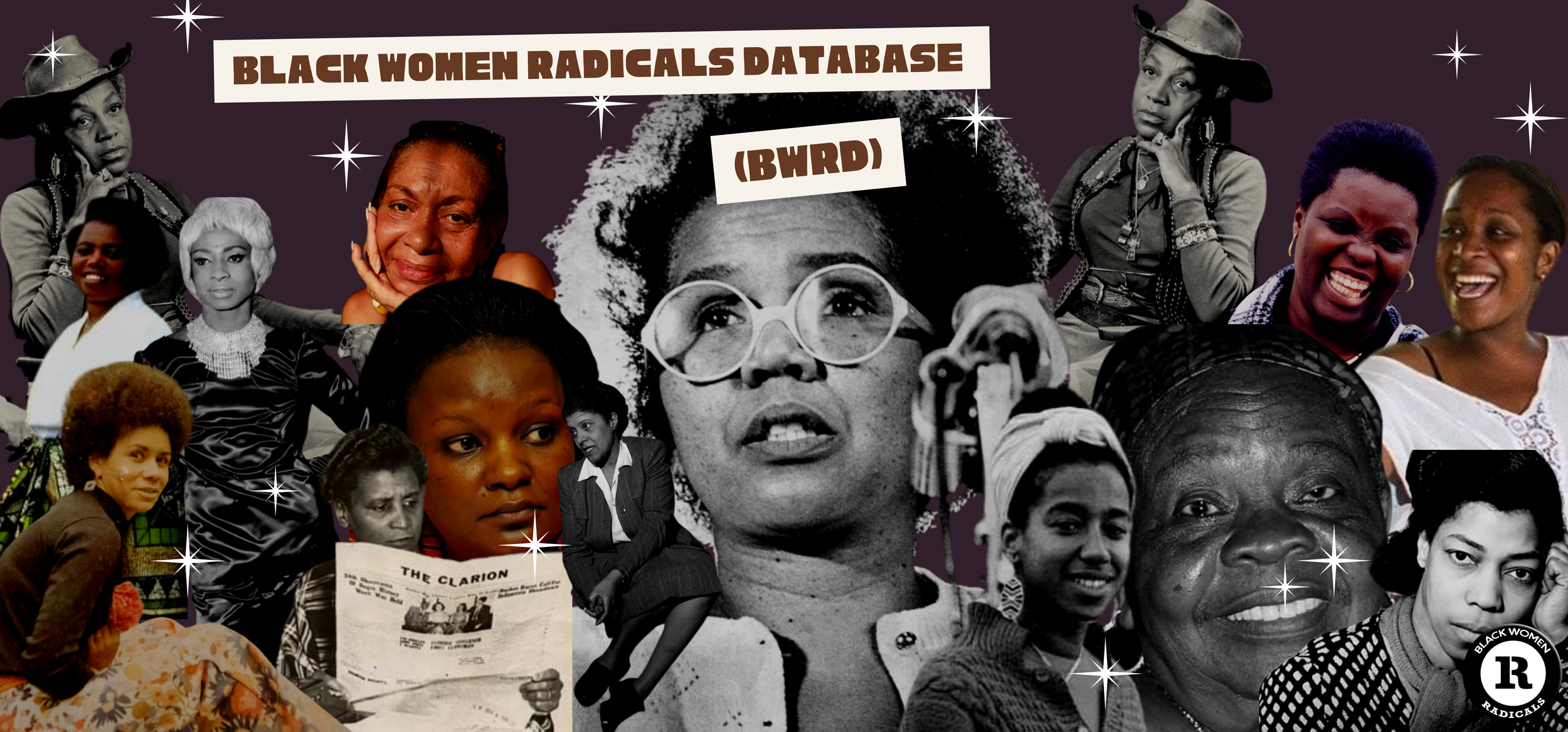
The Black Women Radicals Database (BWRD) historizes and visualizes Black women’s radical political activism in Africa and in the African Diaspora in efforts to build academic, political, and community engagement, dialogue, knowledge production, research, and education about Black women’s significant legacies as socio-political agents of radical change. By housing a database of historical and transnational Black women activists and leaders, the BWRD seeks to overcome the erasure of Black women’s political leadership, organizing, theorizing, and socio-political movement building in Africa and in the African Diaspora that has often been ignored in favor of Black and white cis-heteronormative male charismatic leadership, especially in the field of Black Politics.
BWRD serves as a vehicle to center Black women’s historical political memory, scholarship, epistemologies, and leadership in socio-political movements that may not be taught in academia and in community and public spaces. The Database is free for educational use.*
*The BWRD is a continuing project and the current profiles of the activists and leaders in the Database are not completed and are constantly being updated. Moreover, the BWRD will continue to add profiles of historical Black women activists and leaders in Africa and in the African Diaspora. The Black Women Radicals team will be calling for writers who are interested in contributing to the BWRD soon. For questions about the Database and/or if you are interested in contributing to the BWRD, please contact blackwomenradicals@gmail.com.
Quick Categories
No results found
Africa
Featured

Queen Nzinga of Angola is one of the most celebrated African women to resist European colonisation. Nzinga Mbande led four decades (1620s to 1660s) of warfare against the Portuguese in Angola. Her legacy is a controversial and paradoxical one, as she was a proto-nationalist resistance leader, a devout Christian and Portuguese ally, a superb but ruthless Mbande politician and a vicious slave trader.

Constance Cummings-John was a politician in both pre-and post-colonial Sierra Leone who campaigned for African women’s rights. She was born in 1918 in the British colony of Freetown, Sierra Leone, into the elite Krio Horton family. The Krios were the descendants of freed slaves (Jamaicans, Barbadians and Black Nova Scotians) who had been settled in the area by the British in the 18th century.

Bibi Titi Mohamed was a major leader in the Tanganyikan nationalist movement. She led Umoja wa Wanawake wa Tanzania (UWT), the women’s wing of the Tanganyika African National Union (TANU), and later became the minister for women and social affairs. Mohamed was a Muslim woman born in Dar es Salaam in 1926 to a businessman father and farmer mother.

Charlotte Manye Maxeke is known as the first Black woman from South Africa to hold a graduate degree, and for her exceptional contribution to the struggle for women’s and workers’ rights, and her lifelong dedication to the struggle for peace and justice.

Huda Sha’rawi, an activist for women’s rights and social change, is a household name in the Arab world. In many ways, Sha’rawi represented the face of Egyptian feminism, as demonstrated by her actions, thoughts, speeches and writings.

Commonly known as the warrior queen, Queen Amina of Zaria was the first woman to become the Sarauniya (queen) in a male-dominated society. She expanded the territory of the Hausa people of north Africa to its largest borders in history. Much of what is known of Queen Amina is based on information related in the Kano Chronicles. Other details are pulled from the oral traditions of Nigeria.

Yaa Asantewaa of Ejisu is celebrated for her leadership role in resisting British colonization in the Gold Coast, now modern-day Ghana. She stood up to fight the British occupation in West Africa in spite of an initially cowardly response up by local men, which puts her in the league of Africa’s great women leaders.

An important act of women’s resistance in Nigeria’s history is the Igbo women’s ‘war’ of 1929, which centred around market women’s opposition to unfair taxation and indirect rule in southern Nigeria by the British colonial authorities.

There has been considerable scholarly focus on the nature of women’s participation in nationalist struggles. The importance of this focus is to recognize women’s political agency and not relegate women to supporting roles in what tend to be understood as men’s political struggles.

In Lomé, Togo, Ewe market women undertook similar types of political action and resistance as their Nigerian and Ghanaian counterparts. However, the Ewe herstory is little known. Between 1932 and 1933, the market women were provoked into action by a vacuum of power created by a political stalemate between three male-dominated political groupings that were incapable of resolving the impasse created by new taxes.



Caribbean
Featured


Europe


North America
Featured

Lucille Clifton (June 27, 1936-February 13, 2010) was an American poet, writer, and educator from Buffalo, New York. From 1979 to 1985 she was Poet Laureate of Maryland. Clifton was a finalist twice for the Pulitzer Prize for poetry.

Williana Burroughs (January 2, 1882- December 24, 1945) was a teacher, activist, and politician who organized poor, Black, and immigrant communities in New York. She ran for public office on the Communist Party (CP) ticket, and spent almost 12 years of her life working in the Soviet Union.
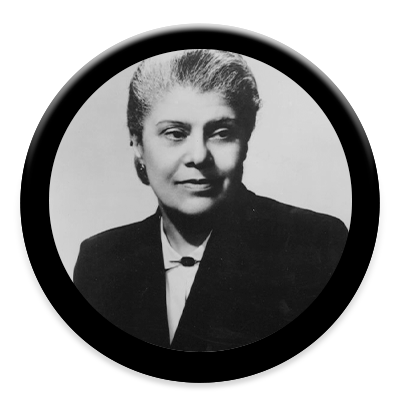
Eslanda "Essie" Cardozo Goode Robeson (December 15, 1895 – December 13, 1965) was an African-American anthropologist, author, actress, and civil rights activist.

Kathleen Collins (March 18, 1942– September 18, 1988), born Kathleen Conwell, was an African-American filmmaker, author and playwright who was best known for her film Losing Ground (1982), which was one of the first Black woman-directed feature films to be released in the United States.


Florynce "Flo" Kennedy (February 11, 1916-December 21, 2000) was an African-American lawyer, feminist, civil rights advocate, lecturer and activist.


South America
Featured


